






Sex after 70 doesn't get much airtime, but here's something that's worthy of spotlighting: people are having the best sex of their lives after 70. Research shows that today's 70-year-olds are more sexually active, more satisfied, and report fewer difficulties than any previous generation. Yes, bodies change. But there's never been more ways to work with those changes - from some shifts in your daily routine to new innovative tools that actually make a difference. The best sex of your life is not sunsetting but still might be ahead of you with some of these tips.
What changes sexually after 70
Most people know that sex changes with age. What they don't always know is why - and that matters, because the why points directly to what you can do about it. Change doesn't mean your sex life has sunset, but here are some of the big changes that might affect how you experience sex.
- Medications - antihypertensives, antidepressants, and diabetes drugs can reduce desire, arousal, and sexual satisfaction.
- Cardiovascular disease and diabetes - both can damage the blood vessels and nerves that arousal depends on.
- Arthritis and chronic pain - joint pain and limited mobility can restrict intercourse and sexual activity.
- Surgery and chronic illness recovery - surgery or illness involving the pelvis, prostate, or cardiovascular system can affect sexual function temporarily or long-term.
Sexual changes in women after 70
- Estrogen drops - and that has a ripple effect: dryness, thinner tissue, less arousal.
- Desire can dip - a review of research on older women found desire tends to decline, though it's rarely about hormones alone. Your relationship and overall health matter just as much.
- Blood flow slows down - less blood flow to genital tissue makes it more difficult to reach arousal, and that affects sensation and lubrication, too.
- Orgasms can take longer or feel different - tied to the same reduced blood flow and tissue changes from estrogen shifts. If you can’t get aroused, orgasm is harder to reach.
Sexual changes in men after 70
- Testosterone drops - by 70, about 30% of men have testosterone levels low enough to cause symptoms. Erections take longer to show up, might not be as firm, and can be harder to hold onto.
- Your prostate can have issues - and they’re linked to weaker erections, changes in ejaculation, and lower desire, separate from age or anything else going on.
- ED happens, and heart disease, too - ED is referred to as the canary in the coalmine because it's often the first sign of heart disease. They both come from the same blood vessel damage. Diabetes and high blood pressure raise the stakes.
16 tips for a fulfilling sex life after 70
This is where it gets good. Here are comprehensive tips to help you build a sex life past 70 that you're excited about, not one you settle for.
1. Stay active, your sex life will thank you
Exercise is the elixir of your sex life, and your health in general. Your cardiovascular health helps drive arousal, erections, and lubrication - which makes exercise one of the most direct and scientifically supported things you can do for your sex life, not just your heart health. Research found that just 20 minutes of brisk walking a day was enough to meaningfully lower the risk of early death, even in people who were otherwise inactive.
For men, research in the Journal of Sports Medicine found that exercise - especially moderate-to-vigorous aerobic exercise - produced a significant improvement in erectile function. If ED is showing up in your sex life, certain exercises like Kegels for men can help (and no, Kegels are not just for women). Pelvic floor exercises have been shown to be some of the best exercises for ED and ejaculatory control, too. So, don’t knock Kegels until you try them.
For women, research in the journal Menopause found that a 12-week program of Qigong, a slow, low-impact mind-body exercise, led to significant improvements in desire, arousal, lubrication, and satisfaction in postmenopausal women. On the physiological side, a study found that just 20 minutes of intense exercise directly increased genital blood flow response to arousal, especially in women already dealing with low desire.
Muscle mass and strength decline steadily with age, and research from the National Strength and Conditioning Association found that resistance training counters that loss - preserving the mobility and stamina sex actually requires. Two to three sessions a week is enough.
Exercise also triggers the release of endorphins, the body's natural mood elevators - the same chemical lift you feel after a good workout is doing real work against the stress and low energy that can flatten desire before anything physical even comes into play.
You don't need to train like an athlete. Walking, swimming, cycling, or something gentler, like yoga, counts. Consistency matters more than intensity.
2. Get regular check-ups
Low testosterone, elevated PSA, high blood pressure, blood sugar - all of it affects your sex life and sex drive, but these are things that can be treated and prevented once it's found. For example, high cholesterol is directly linked to ED through the same artery buildup that affects the heart, and thyroid issues are linked to sexual dysfunction in both men and women.
Medications matter, too. Research found antihypertensives, antidepressants, and diabetes medications are all linked to reduced desire, arousal, and satisfaction. Blood pressure meds can restrict the same blood flow needed for arousal, while antidepressants often blunt sensation and delay orgasm.
An annual physical with full bloodwork catches most of what's fixable. Worth treating as a priority, not a formality.
3. Build your intimacy toolkit with lubricants, moisturizers, etc.
Lubricant and vaginal moisturizer do two different jobs, and at 70, both could be a big benefit to your sex life and comfort.
Vaginal moisturizers, like Kindra’s V Hydration or Replens, are designed to help keep vaginal tissue hydrated, which is important since your estrogen levels have significantly declined by 70.
However, lubricant is highly recommended to be used during intercourse. It's an important part of reducing friction during sex and making sure you're enjoying the experience, not just tolerating it. There are different lubricants made specifically for vaginal dryness, but you may have to try a few before you find the one that works best for you.
Another supplement to add to your routine is vitamin E suppositories. Research found vitamin E can help reduce vaginal dryness and irritation in postmenopausal women, making them a solid non-hormonal option for your intimacy kit.
4. Invest in vibrators – they enhance arousal
Women who use vibrators report better sexual function, more desire, increased arousal, lubrication, and orgasm, with no adverse effects. Vibrators are one of the safest (and most stimulating) ways to increase novelty and arousal.
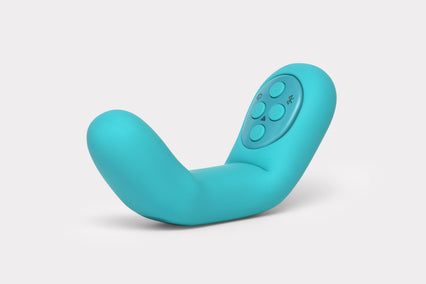
Here are a few solid vibrator choices that are doctor-recommended and backed by science to improve arousal and lubrication.
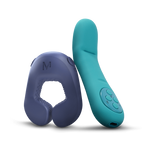
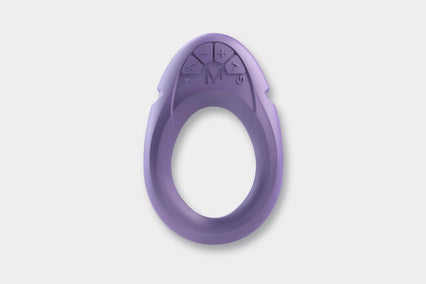
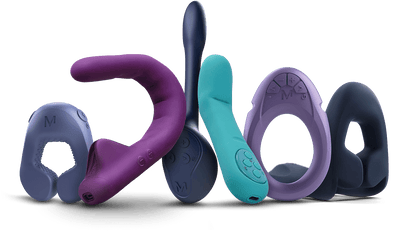
Legato is the first flexible vibrating vulva ring built to spread stimulation across the entire vulva instead of just the clitoris. Its 4 motors disperse gentle vibrations across the whole area, increasing the blood flow that arousal and lubrication both depend on. It's designed with a wide gap in the center so you can use it during sex to keep getting external stimulation, which over 80% of women require to reach orgasm during penetration.
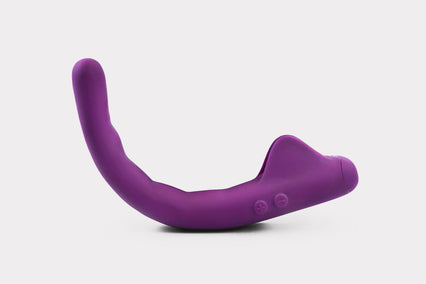
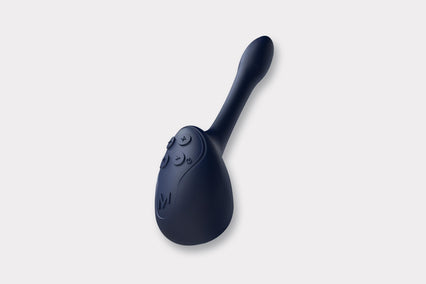
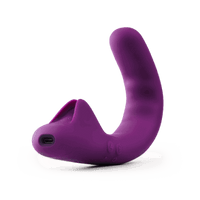
Another is Crescendo 2, the first vibrator that actually bends into different shapes, not just flexes. It's basically a pelvic wand that vibrates and bends to your needs. 6 powerful motors run end to end, meaning wherever it's touching, it's arousing. Multiple motors plus bendability mean you can adjust to your preference and stimulate multiple erogenous zones at the same time for big, blended orgasms. Like Legato, it's also backed by science to support arousal and lubrication and recommended by doctors.
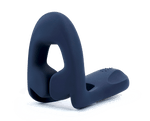
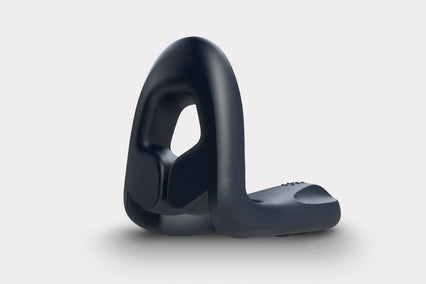
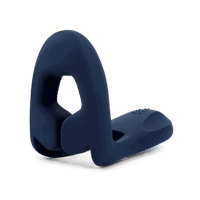
Men have options too, like Tenuto 2. This male vibrator is worn at the base of the penis and is clinically proven to improve erection strength by up to 2x. It's not just for him either. The front 3 motors arouse the entire vulva and clitoris during sex, so both partners are getting stimulated at once.
5. Make outercourse the new normal
While most of us tend to put a lot of emphasis on penetration as the only way to have sex, it's not the only way. Outercourse and non-penetrative intimate activities are another avenue to being sexual with your partner.
Research shows that couples navigating ED after prostate surgery had the same amount of sexual satisfaction once they shifted their perspective on what sex looked like for them. Non-penetrative intimacy can include activities like mutual masturbation, oral sex, and grinding or dry humping.
The same logic applies to everything, whether the reason is erections, joint pain, or just preference. Adjust your activity for what you can do.
6. Explore hormone therapy
Hormone changes affect both men and women sexually after 70, and hormone therapy is one option of treatment, though it isn't one-size-fits-all.
For women, hormone replacement therapy (HRT), estrogen often combined with progesterone, taken as a pill, patch, or gel, is the option most have already heard of. Research supports that HRT can improve hot flashes, sleep disturbances, and vaginal dryness, too. HRT isn’t right for everyone, so it’s important to discuss your options with your doctor.
Low-dose vaginal estrogen is another option. It's a cream, tablet, or small ring you insert directly into the vagina, so it stays local instead of traveling through your whole bloodstream the way systemic HRT does. Localized forms of estrogen have been shown to help vaginal dryness, thinning tissue, and ease the discomfort that comes with both.
DHEA suppositories work the same way, inserted vaginally rather than taken as a pill, so the hormone does its job right there in the tissue instead of circulating everywhere. Research found that women saw real improvement in desire, arousal, lubrication, and orgasm, with less pain during sex too.
For men, testosterone replacement therapy can help with low desire, erectile function, and mood when levels are confirmed low. Studies show that men over 65 with confirmed low testosterone reported genuine gains in sexual desire and erectile function after starting treatment, along with improved mood.
Hormone therapy can seem intimidating, but it can help tremendously with your overall quality of life and sex life, so it’s worth a long conversation with your doctor.
7. Ask your doctor about prescription options
If hormones aren't an option at all, there's ospemifene, a prescription daily pill that isn't a hormone but acts like one in vaginal tissue specifically. It's been FDA-approved for treating moderate to severe pain during sex tied to vaginal atrophy.
There are two FDA-approved options for women worth knowing about: Addyi and Vyleesi.
Addyi (flibanserin) is considered the female equivalent to Viagra, though it doesn't work physically - instead, it helps rebuild desire by rebalancing brain chemistry. It's a daily pill that takes several weeks to feel the effects.
Vyleesi (bremelanotide) boosts desire more immediately by activating arousal pathways in the brain directly. It's a self-administered injection taken about 45 minutes before sex. Both are recommended for women with low sexual desire.
For men, Viagra (sildenafil), Cialis (tadalafil), Levitra (vardenafil), and Stendra (avanafil) are all PDE5 inhibitors, meaning they keep blood vessels relaxed and improve blood flow to give you erections. They are clinically proven to help men get and stay erect. Each has its own dosage and timing, and each is worth talking to a doctor about pros and cons.
8. Prioritize pelvic health, it's more than Kegels
Your pelvic floor is more involved in your sex life than most realize, and it's more than just doing Kegels.
For women, a weak pelvic floor is tied to painful sex, less sensation, difficulty with orgasms, and incontinence, including leaking urine during penetration or orgasm. That's more than inconvenient. Research found women dealing with urinary incontinence were more likely to avoid sex completely. Kegels help, but they're not the whole picture.
Pelvic floor physical therapy is the gold standard, and besides seeing a physical therapist, there are devices that can help, like the FDA-approved Elitone. It's a wearable external device that uses electrical stimulation to contract and strengthen your pelvic floor to help with bladder function and control. It’s like doing 100 Kegels without doing any of the work.
For men, pelvic floor strength affects erections, ejaculation control, and bladder function. Research shows pelvic floor training can improve both erectile dysfunction and premature ejaculation - yes, Kegels work for men too. But strengthening and coordination are only half of it; the missing half is called ‘downtraining’. Incontinence can come from holding too much tension in your pelvic floor, and that's where devices like kGoal Boost make a big difference for men. It's a biofeedback trainer that you sit on (fully clothed), guided by app workouts, to help downtrain your pelvic floor.
9. Check your prostate
Your prostate plays a bigger role in your sex life than most men realize - it's tied to erection quality, ejaculation, and urinary issues. Things like prostatitis, an enlarged prostate, ED, and pelvic pain often show up together.
One of the easiest ways to stay ahead of prostate issues is a PSA test, usually part of an annual physical for men over 50, along with a yearly visit to a urologist.
If you're dealing with prostate fluid buildup or prostatitis, a urologist might prescribe an antibiotic, or they might manually massage your prostate.
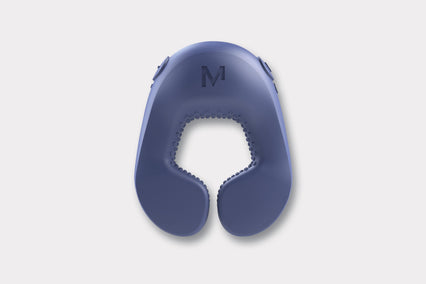
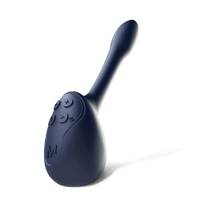
If you want a more private option for being proactive about your prostate wellness, try the tool urologists designed to mimic professional prostate massage - Molto. This ultra-slim (one finger width) vibrator stimulates the prostate with powerful vibrations that help you reap the performance benefits of prostate massage. There’s a ton of other benefits and reasons why men love Molto. And it’s FSA/HSA eligible.
10. Look into ED aids and erection support
Beyond pills, there are devices and tools called erection aids that can help facilitate erections - and even partner pleasure at the same time.
Penis pumps, or vacuum erection devices, create an erection through suction rather than medication. Research shows they're effective and non-invasive, and they're commonly recommended for men recovering from prostate surgery to help with ED.
There are cock rings or penis restriction rings that help you keep an erection by restricting blood to the penis. A 2024 review found constriction devices are among the most effective and most widely used wearable options available. Some cock rings even vibrate, like Tenuto Mini, for the added benefit to partner stimulation while worn.
Then there’s a whole different category of ED aids that are wearable vibrators, one specifically is Tenuto 2. This male vibrator is worn on the penis and it’s clinically proven to improve erection hardness and partner pleasure at the same time. It features 4 powerful motors, but the front 3 motors work to stimulate a partner at the same time, so both of you get something out of it.
If you’re not keen to take a pill every time you want to perform, there are many natural options at your disposal.
11. Find the sex positions that work for you
Missionary and doggy style aren't off the table at 70, but if a hip replacement, arthritic knees, or a bad back are part of your life now, they might not be your best option anymore.
Here are a few suggested sex positions for seniors worth trying instead:
- Side-lying or spooning positions for low-impact penetration with minimal joint strain
- Edge-of-bed for reduced pressure and easier entry
- Seated sex positions if knee or hip issues get in the way
- Modified missionary with a wedge under your hips
- Woman-on-top for control over depth and pace
None of these are rules - they're a starting point. Keep experimenting until you find what actually works for your body.
12. Use wedges, pillows and props to support intimacy
You don't have to force your body into a position it doesn't want to hold, and you don't need anything complicated to change that.
A sex wedge or pillow, like the ones Liberator makes, angles your hips up and forward, so you get better positioning without your lower back doing all the work. If you'd rather not buy something new, a standard pillow tucked under your lower back or hips does something similar for a modified missionary, taking the load off achy joints without changing much else about how you have sex.
Side-lying positions get easier with a bolster propped behind you for support, since you're not using your own muscles to hold yourself steady the whole time. And if balance or leverage is the issue more than pain, something as simple as a bed rail or a sturdy headboard gives you somewhere solid to hold onto.
13. Consider therapy if you're navigating loss or divorce
A lot of people reading this are widowed, newly divorced, or getting back into intimacy after years, sometimes decades, without it. That's a different kind of adjustment than anything else on this list.
Grief doesn't stop at losing a person - it can mean grieving your sex life too. Research found most women anticipated missing sex with a partner who died, and most wanted to talk about it, but few people think to bring it up with a grieving friend.
Guilt, body image, and not knowing how dating works after years are all part of grief and loss too. Grief and other unresolved emotions from a loss or divorce don't stay contained in that relationship either - they can follow you into a new one, making it hard to be fully present or aroused with someone new. Research shows sexual desire and arousal are closely tied to mental presence, and working through what's pulling your attention away can improve both.
Sex therapy and individual therapy are both legitimate options for working through mental health issues. Both involve a licensed therapist helping you work through what's going on at a pace that makes you feel comfortable.
14. Get comfortable being sexually independent
Mismatched desire is normal, and it tends to get more pronounced with age. When couples navigate that gap, solo intimacy - masturbation, vibrators, self-exploration - is one of the most effective strategies, alongside partnered sex, not instead of it.
Solo sex isn't a workaround or a sign something's missing in the relationship. It takes the pressure off both partners to be each other's only source of arousal, and it keeps you in touch with what your body responds to now, which can change over the years.
Being sexually independent also relieves a specific kind of frustration: your needs are getting met, so there's no expectation that a partner has to meet them on your timeline. And guilting or pressuring a partner into sex never actually works. It just adds resentment on top of the mismatch you were already dealing with.
15. Practice safe sex
If you thought this was advice for younger adults, think again. STI rates among adults over 65 have more than doubled in the last decade, and chlamydia cases have more than tripled.
These numbers disprove the idea that seniors aren't having sex - they clearly are, which is exactly why safe sex still matters. And this isn't about pregnancy: you're still susceptible to STIs and STDs at any age.
Divorce and widowhood put a lot of people back in the dating pool for the first time in decades, often with partners whose sexual history they don't know yet. Get tested before you're intimate with someone new, keep condoms in the mix, and say so out loud - it protects you and your sex life.
16. Talk to your partner and keep talking
Good sex has always come down to the same things: communication, empathy, patience, and understanding. That doesn't change after 70, but it matters more, because more is changing in your body and your partner's than at any other point in your relationship.
Desire discrepancy - one partner wanting sex more than the other - is one of the most common dynamics in long-term relationships at this stage, and almost nobody names it directly. One person wants sex more. The other feels guilty saying no. Neither brings it up, so it just sits there.
Talking about it doesn't have to be complicated. What's changed, what feels good now, what doesn't - that's the whole conversation. Research found that couples who talk openly about sexual preferences report higher satisfaction, and that holds true whether you've been together five years or fifty.
Keep it a conversation, not a performance review. Bring it up outside the bedroom, when neither of you is anxious about it during intimacy, and frame it as "here's what I've noticed" rather than a list of complaints.
If the conversation keeps stalling, or the discrepancy is creating real distance, sex therapy or couples counseling is worth considering.
Takeaway
Sex after 70 isn't about performing like you did at 30. It's about working with the body you have now: building an intimacy toolkit, using an erectile aid, a vibrator, or just a well-placed pillow.
Pick two or three tips that actually apply to you and start there. And if chemistry needs a little help along the way, the best vibrators to use during sex can keep things interesting no matter what decade you're in.