





You finally get the baby down. The house is quiet. Your partner reaches for you - and you want to want him - you really do. But your body has been on call since 5am, and it's already clocked out.
In Beyond the Bump subreddit, women describe this exact experience: not wanting to be touched, not recognizing their own bodies, not having any desire for sex, not even wanting to masturbate. One woman said she hated how her body felt. Another couldn't connect her breasts with anything sexual after breastfeeding. Another was still struggling to feel any desire two years into postpartum.
Two years.
Throw that 6-8-week postpartum sex timeline right out the window.
Most postpartum articles offer generic advice like: "communicate with your partner" and "make time for self-care." As if a bath bomb is going to fix a hormonal crash.
So, let's talk about what's actually going on, and some practical tips you can try to go from mommy-mode to feeling like a woman who desires again.
First, understand why your sex drive disappeared
Your body just grew and pushed out a human being. It’s a miracle, literally. Then it started producing milk. You went from independent to touched, needed, and dependent on around the clock. The idea that desire should bounce back doesn’t take into account everything that's happening hormonally, physically, and emotionally.
After birth, estrogen drops dramatically. Estrogen is what keeps vaginal tissue lubricated, sensitive, and comfortable. Without it, sex can feel uncomfortable, irritating, or even painful - especially in the early months. If you're breastfeeding, the hormone prolactin keeps estrogen levels suppressed for as long as you nurse. Which means for some women, this isn't a six-week problem. It can be months or years until your body feels like it did pre-baby.
For some women, their sex drive is gone as long as they breastfeed.
One study found that 83% of women encountered sexual problems in the first three months after delivery, dropping to 64% at six months postpartum. However, only 15% of women who had a postnatal sexual problem reported discussing it with a health professional, which is an issue.
Perineal tears, episiotomies, and pelvic floor trauma are incredibly common after childbirth. Research shows that perineal trauma is the biggest predictor of painful sex in the first year postpartum.
First-time mothers tend to have it hardest because the tissue has never been through labor before. However, recovery from any birth can take months before sex isn’t painful.
So, if you're struggling sexually after a baby, that's actually ‘normal.’
It's also worth knowing that research found that men's testosterone levels decline across the transition to fatherhood, which may affect his sex drive, too.
Keep an open mind and explore these 11 ways to help get back in the mood after having a baby.
1. Focus on desire
Before sex, you need to feel desire - and feel desired.
Think of desire like a fire. When the hearth has been cold for a while, you can't just toss a log on and expect it to roar into a full blaze. You need kindling. Small sparks. A little air. Time.
In the Beyond the Bump subreddit, women describe this beautifully. One woman said what she needed to get back in the mood wasn't actually sex - it was sexy touch without expectation. Flirty words. Innuendos. Making out like teenagers. Dancing to sexy music in the kitchen. Being wanted without the pressure of having to do anything about it.
That kind of low-stakes intimacy does something important: it reminds you that you're still wanted, not just needed. Your partner isn't flirting with you just because he's angling for sex - he's flirting because he loves you. That takes the transactional pressure off sex and puts the relationship back at the center.
So, take sex off the table for a while. Literally tell your partner: not tonight, not this week, maybe not for a bit. Then use that pressure-free window to rebuild the anticipation again, the feeling of being desired.
2. Cater your expectations - and timelines
Everybody heals differently. Every hormonal recovery moves at its own pace. Comparing yourself to your friend who was "back at it" by week eight - or to your own pre-baby self - is a losing game.
That 6-week timeline you keep reading about is the earliest you might be physically ready for sex, not a fixed date, and certainly isn’t true for many women. And that timeline doesn’t take into consideration your mental and emotional readiness to have sex again.
Your brain and body chemistry changed dramatically during pregnancy and postpartum. The pressure to "get back to normal" is often what makes everything harder. You wouldn’t break your legs and expect to run a marathon in 6 weeks, so why measure your intimacy against an arbitrary deadline? Pressure isn’t useful for rebuilding desire - if anything, it's the opposite.
Some women feel a flicker of desire within a few months. Others said their drive didn't fully come back until their baby was sleeping through the night several years later. Stop checking your progress against a calendar, a milestone, or anyone else's story. Your only job right now is to meet yourself where you are, not where you think you should be.
3. Make time for yourself - and yes, self-care
After months of feeding, not sleeping, and living in the same loungewear - most women don't feel desirable. That’s understandable. And it’s not going to happen overnight, but the little things add up over time. Self-care can help you find your way back.
Start small. Paint your nails. Read a book. Take fifteen minutes to shave your legs. Put on perfume. Do your hair. Wear your favorite outfit. It's not just an aesthetic thing; these little actions serve as reminders that you're a person who has an identity outside of your baby, and you also need things and deserve care, too.
Work on how you feel in your body, too. Childbirth changes the body, so if you’re feeling like a stranger in it, work on getting re-acquainted with your new and changing shape. If this level of self-love feels like a fake it until you make it, that works too.
One exercise worth trying: stand in front of the mirror for a few minutes every day and only compliment yourself - out loud. The negative thoughts will show up, of course. For every one of them, counter it with something positive you genuinely notice. Your eyes. Your smile. The softness in your stomach that grew a person. Do it every day, even when it feels ridiculous. Eventually, the kind voice gets louder, and you might be surprised how excited you are by your own body.
4. Masturbate - even if you really don't feel like it
Your sex drive can go dormant in postpartum - especially if you're breastfeeding. Masturbation is a gentle way to wake it up.
Once you've been medically cleared for sexual activity, romance yourself. Take your time, adjust as you need to, and start slower than you think you need to. Internal penetration might still be off the table depending on your birth and any tearing, and external stimulation can also feel tender, so be patient with yourself.
Pleasure is one of the best prescriptions for getting back in the mood. It's a self-fulfilling cycle: the more you feel arousal and pleasure, the more you want it. You're waking your sexual responsiveness, and once the memory of arousal is recent instead of distant, desire becomes a lot more accessible.
5. Try MD-recommended intimacy tools built to rebuild arousal
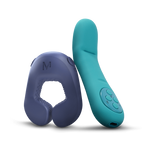
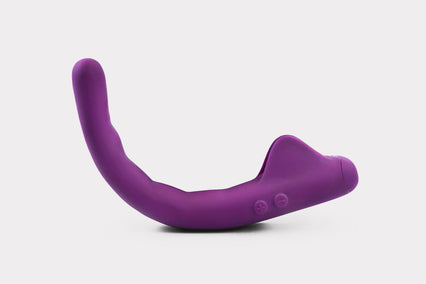
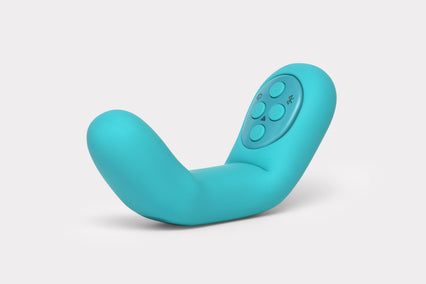
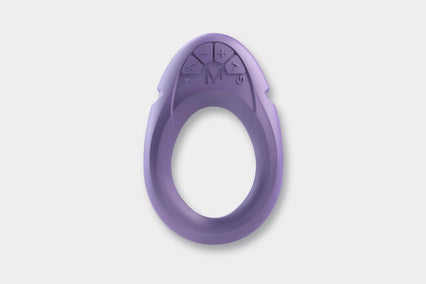
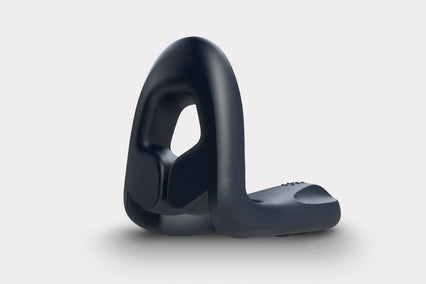
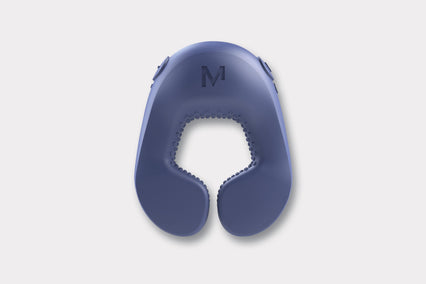
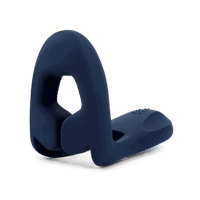
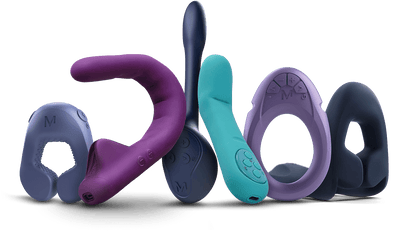
If arousal is hard to come by, there are a few intimacy tools that can help your body rediscover pleasure postpartum. Doctors recommend each of these to couples to help rekindle intimacy: Legato, Crescendo 2, and Tenuto 2. They help increase blood flow (key for arousal to grow), improve arousal, and support natural lubrication. Depending on your situation and needs, one of these might just be your new favorite accessory.
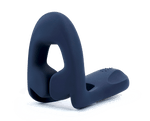
Legato is a flexible vulva vibrating ring designed by doctors for exactly this kind of moment - when penetration feels like too much. It contours to your curves and sends gentle, dispersed vibrations across the entire vulva and clitoris, waking up arousal externally without any pressure. However, with a generous gap in the middle, a partner or another sex toy can fit through, so you can also enjoy it during sex.
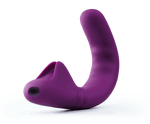
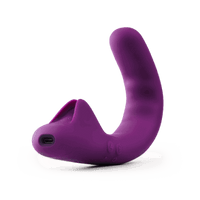
Crescendo 2 is a fully bendable vibrator that can be used prenatal for perineal massage and to assist with postpartum arousal. The bendability and customization of this vibrator matter when your anatomy changes. Doctors love it because its 6 motors can stimulate multiple areas at the same time, layering sensations for more arousal. Its vibrations also support natural lubrication and blood flow - both of which tend to take a hit postpartum.
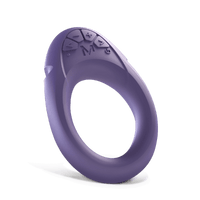
Tenuto 2 is a different kind of vibrator; it’s worn by him but made for both of you. It's clinically proven to improve erection strength (bonus for him), but the real benefit to you is the 3 front motors that stimulate you externally during sex. Instead of the endless reach around to give you external stimulation during sex, Tenuto 2 does it for you.
All three are FDA-registered, doctor-designed, and FSA/HSA eligible - meaning you can use pre-tax dollars on your postpartum intimacy journey.
6. Read or listen to something spicy - women swear by this one
Smutty fanfiction, literotica, audio porn, women swear by these. Spicy romance novels brought their sex drive back from the dead.
There's real science behind the benefits of erotica. Researchers studying sexual desire found that erotic fantasy inspires responsive desire and is a wonderful way to build arousal. The slow burn, the anticipation, the build-up over chapters gives your imagination the space to add context and get aroused on its own terms.
So, download that Kindle app. Pick up a book with a scandalous cover. Listen to audio porn in bed - or in a bubble bath with your favorite vibrator. Let your mind go where it wants to go.
7. Prioritize intimacy with your partner
Intimacy doesn't only mean sex. It’s all the connecting moments that make a couple feel like a couple. And, while it’s contentious, scheduling intimacy is the best way to prioritize it. The adage is true; you make time for what’s important, and if intimacy is important - schedule it. This applies to all couples, not just postpartum - anyone juggling work, kids, and real life.
Even when penetrative sex isn't on the table, plan something that brings both partners back into each other's orbit. A date night. A movie night once the baby's asleep. An at-home sensual massage. Cooking dinner together without phones. Cuddling in bed for a few minutes before the day starts.
Small, intentional moments of connection are what keep a relationship from slipping into roommate mode.
8. Explore outercourse and other forms of intimacy
Sex doesn't have to mean penetration. For postpartum couples, outercourse and other forms of physical intimacy can be more pleasurable, less stressful, and a lot more comfortable during recovery.
Outercourse covers non-penetrative intimate activities that provide sexual satisfaction, but without penetration. A sensual massage that turns into something more. Dry humping. Oral sex. Mutual masturbation.
Broadening the definition of sex when penetration doesn't work for one partner is an opportunity to rediscover each other on completely new terms. Many couples say this kind of intimacy brings them to a new level of connection they didn't have before.
9. Have a babysitter on speed dial
Every parent knows the life-saving benefit of a babysitter, and if you’re a new parent, start building your list of trusted babysitters. A grandparent who'll take the baby for an afternoon. A friend. Your neighbor. A sitter you've already vetted and can call on short notice.
Time away, even a couple of hours, lets you and your partner exist as a couple again, not just parents. Use that window however you want. Date night. Sleep. Eat dinner at a restaurant without being interrupted. Have sex without the baby monitor on. It doesn’t matter; what matters is getting regular time to be a couple again.
10. Book a pelvic floor physio appointment
Pelvic floor physiotherapy is one of the most valuable resources for postpartum recovery. A pelvic floor physio can assess postpartum pelvic floor dysfunction, scar tissue from tearing or episiotomies, help with relaxing or strengthening the muscle, and give you exercises tailored to your body - typically more involved than Kegels alone.
If sex is painful, if you're experiencing urinary incontinence, or if something just doesn't feel right down there, a pelvic floor physio is a great specialist to add to your postpartum care team. Ask your OB/GYN for a referral or look for a pelvic health specialist in your area.
11. Talk to your OB/GYN
Many women assume pain, dryness, or disappearing desire are just part of postpartum and try to ride it out quietly. Your OB/GYN may have tools to help with your recovery, such as topical estrogen, hormone screenings, referrals for pelvic floor physio or sex therapy, or other treatments, depending on what's going on. The right approach depends on what's happening for you, and your doctor is the right person to help you figure that out. You don’t have to struggle with pain or uncertainty without help.
Takeaway
Bouncing back into intimacy after having a baby is a part of the postpartum journey that will look different for all women and their partners. Your body, your hormones, and your priorities have all changed - and the barriers are rarely just one thing. Sometimes it’s mental: exhaustion, pressure, and hormones. Other times, it’s physical pain: pelvic floor pain, tightness, and discomfort that weren't there before.
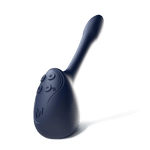
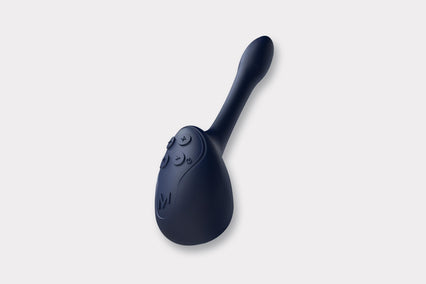
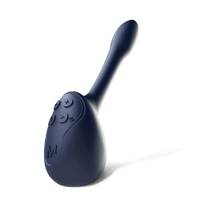
If pelvic floor pain is holding you back, and you’ve gotten the green light from your doctor, pelvic floor therapy with a pelvic wand may be a beneficial companion alongside these 11 tips to help you reclaim intimacy.